
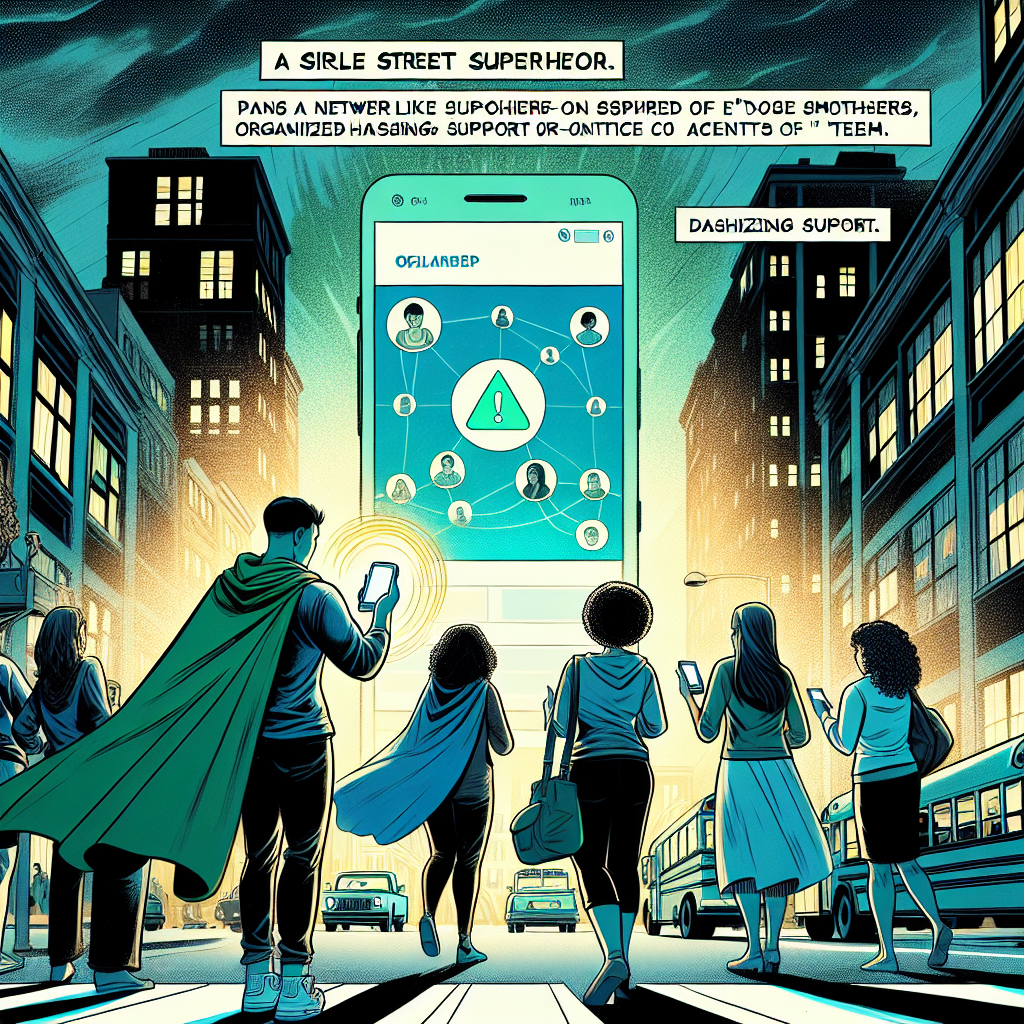
Peace of mind begins when you know that, in an emergency, there is a network ready to respond.
Being a mother means guiding, educating, and also anticipating. In the school routine and activities with friends, technology can become an ally to activate help when it is needed most. Below you will find practical recommendations focused on alerts, trusted networks and family coordination to better care for your children without invading their autonomy.
1) School zone: how to stay informed about incidents
In places where your community gathers —such as the school area— it is important to know that, if an incident occurs, anyone who activates an alert in that place can generate notifications for mothers, fathers, and connected trusted networks. This makes it possible to react faster: coordinate who is nearby, who to call, and where to meet.
- Agree on a safe meeting point near the school (library, café, familiar business).
- Save key contacts (school office, trusted parents, supportive neighbors).
- Define “what to do” in 3 steps: notify, meet, confirm that everyone is okay.
2) Trusted networks: family and community that respond
Organize circles of trust with family members, parents of classmates, and neighbors.
The idea is that, when there is an alert, the people who are closest can act first while others support remotely or go to the location.
- Role for each person: who calls the school? who goes there? who coordinates transportation?
- Simple confirmation language: “Received”, “On my way”, “Together now”.
- Monthly review of the contact list and response agreements.
3) Alert button: seconds that matter
Teach your children to keep the alert button ready (for example, a Bluetooth button paired with the phone). A double-click can notify the right people in seconds. Reinforce that it should be used only when they feel at risk, see an incident, or need immediate help.
- Guided practice: simulate an activation so they know what happens next.
- Golden rule: when in doubt, activate; it is better to check and dismiss than to arrive too late.
4) Social activities: agreements that bring calm
Before outings with friends, agree on safe points, schedules, and how they will notify you if plans change. Remember: technology does not replace judgment; it strengthens it when it is time to notify, coordinate, and ask for support quickly.
- Pre-outing checklist: charged battery, button ready, emergency contact at hand.
- Plan B: alternative transportation and a trusted person who can pick them up if something unexpected happens.
What the app does not do (and why it matters)
To protect privacy and keep the focus on effective response, real-time location is not tracked. Activation centers on Alerts and network notifications to mobilize support when it truly matters.
Caring means coordinating: from alert to action
Family safety does not depend on one person alone. It is built with simple agreements, trusted networks, and tools that, when an alert sounds, turn seconds into decisions. With the right community around you, no mother is alone.
👉 Ready to organize your network? Create your circles of trust, share this plan with other mothers, and agree on your action route.
Turn information into action
Organize your neighborhood safety network with Teem
Create alerts, connect neighbors, and protect important places with a community safety app designed for Mexico and LATAM.
See plans and download Teem